Welcome: Hunan Minstrong Technology Co., Ltd
Language:
 ∷
 ∷
 ∷

∷
∷
∷
 ∷
∷
∷
Both granular and honeycomb Hopcalite catalysts can efficiently oxidize carbon monoxide into carbon dioxide at ambient temperatures. However, they are designed to address different engineering priorities. Granular catalysts typically provide higher surface area and catalytic activity, making them suitable for low- to medium-flow applications requiring deep CO removal. Honeycomb catalysts, on the other hand, offer significantly lower pressure drop and greater gas-handling capacity, making them ideal for large-flow continuous operations. Therefore, catalyst selection should be based on gas flow rate, pressure-drop requirements, installation space, and operating objectives rather than simply comparing which structure appears more efficient.
Hopcalite catalysts are primarily composed of copper-manganese mixed oxides that catalytically convert carbon monoxide into carbon dioxide in the presence of oxygen.
Because industrial applications have varying requirements for gas distribution, pressure-drop control, treatment capacity, and equipment design, manufacturers produce Hopcalite catalysts in multiple forms, including granular, cylindrical pellet, and honeycomb structures.
Although these structural variations do not change the fundamental catalytic reaction mechanism, they significantly influence gas-solid contact efficiency, mass transfer performance, pressure drop, and overall operating costs.
Granular Hopcalite catalysts are available in several forms, including irregular granules, spherical particles, and cylindrical pellets.
Their primary advantage is the relatively high specific surface area available within a given catalyst volume. A larger number of active sites increases the probability of contact between carbon monoxide molecules and the catalyst surface, often resulting in higher conversion efficiency under comparable operating conditions.
The packed-bed structure also promotes effective gas diffusion, making granular catalysts particularly suitable for low-concentration CO removal and high-purity gas applications.
However, granular catalyst beds generally generate a higher pressure drop as gas passes through the packed particles. In large-flow systems, this increased resistance can raise fan or compressor energy consumption. Therefore, granular catalysts are commonly selected for low- to medium-flow applications where purification performance is prioritized over pressure-drop considerations.
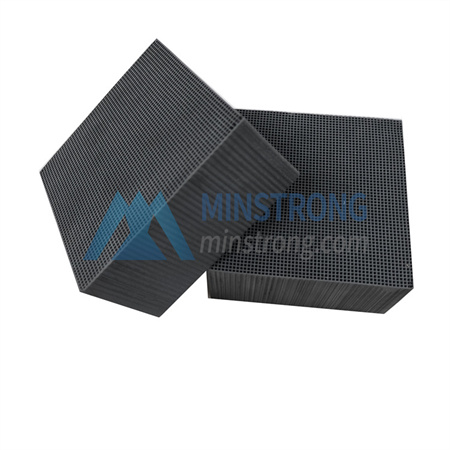
Honeycomb Hopcalite catalysts utilize a parallel-channel design that allows gas to flow through organized passages within the catalyst structure.
Compared with packed granular beds, the most significant advantage of honeycomb catalysts is their exceptionally low pressure drop. Even at relatively high gas velocities, they can maintain smooth airflow with minimal resistance.
For large air-treatment systems, industrial ventilation units, and continuous process equipment, reduced pressure drop translates directly into lower operating costs and improved system stability.
In addition, honeycomb structures provide uniform gas distribution and are less prone to channel blockage. Their mechanical strength also makes them well suited for applications involving vibration, frequent startup and shutdown cycles, or long-term continuous operation.
The trade-off is that honeycomb catalysts generally offer less active surface area per unit volume than granular catalysts. As a result, achieving equivalent CO conversion may require a longer catalyst bed or optimized gas residence time.
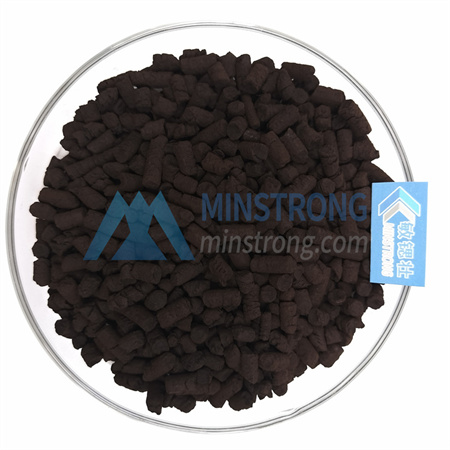
Granular Hopcalite catalysts are commonly used in:
These applications typically prioritize high CO conversion efficiency and extremely low outlet CO concentrations, making granular catalysts a practical choice.
Honeycomb Hopcalite catalysts are often preferred for:
When gas flow rates are high, honeycomb catalysts can significantly reduce system resistance and improve overall operating efficiency.
When evaluating catalyst structures, engineers should focus on the following parameters:
Neither granular nor honeycomb Hopcalite catalysts can be considered universally superior. Their differences lie primarily in the balance between catalytic efficiency and fluid-dynamic performance. Granular catalysts maximize active surface area and CO conversion efficiency, while honeycomb catalysts minimize pressure drop and enhance gas-handling capacity. Understanding these structural characteristics and evaluating application-specific requirements such as flow rate, concentration, space limitations, and energy consumption are essential for selecting the most effective catalyst solution and achieving optimal long-term system performance.
AUTHOR:KAKA
DATE:2026/6/8
Contact: Candyly
Phone: +8618142685208
Tel: 0086-0731-84115166
Email: sales@minstrong.com
Add: E2 Building, Kinglory Science And Technology Industrial Park, Wangcheng Area, Changsha, Hunan, China.
 minstrong
